Beat screen time and ace your finals
Your phone isn’t helping (but it may not be the problem either)
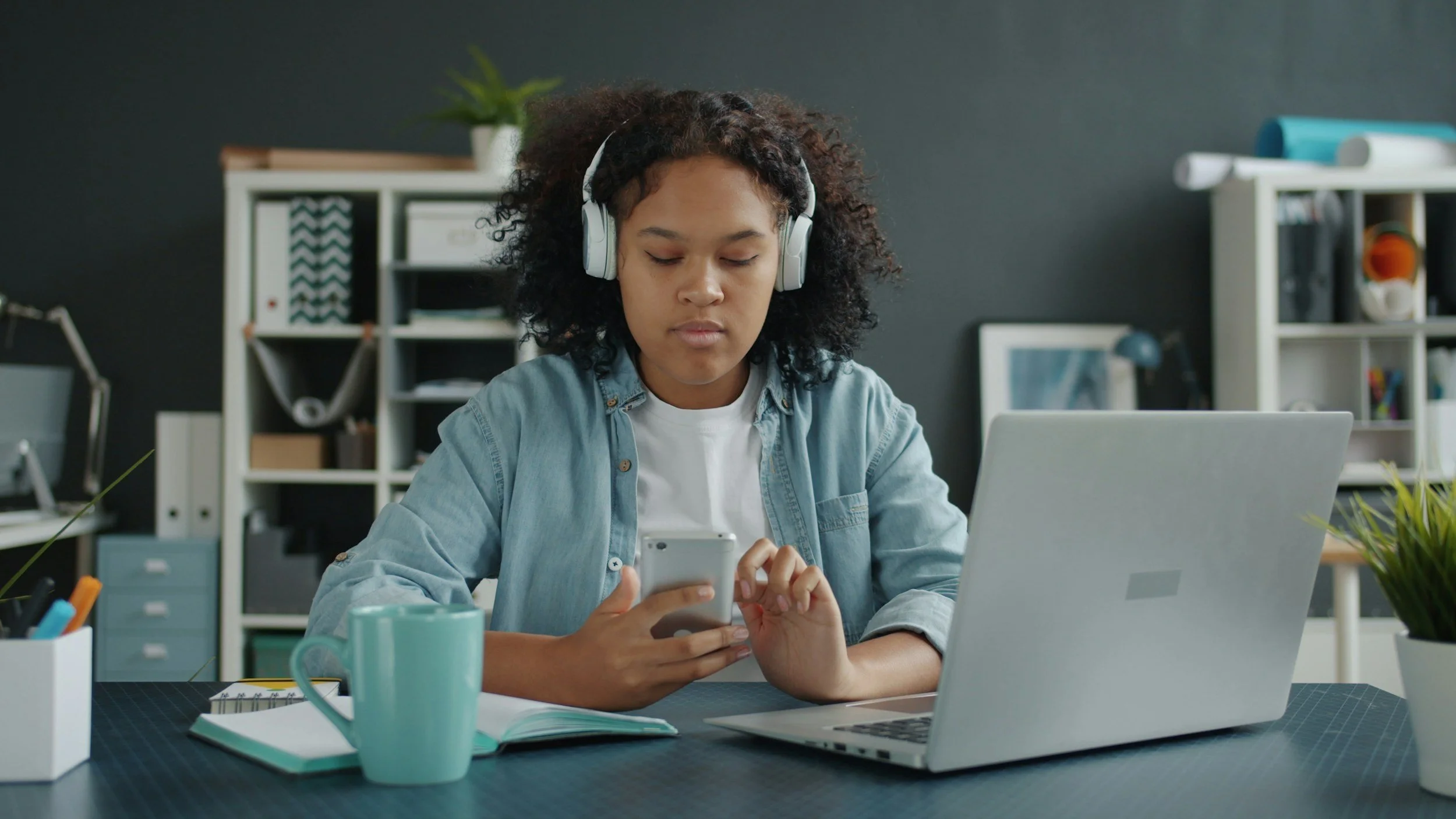
December. The sun barely shows up, energy feels scarce, and you're sitting with that final project while somehow finding yourself deep in someone's tiny food cooking videos.
You sit down to write your paper. Time passes differently when you're online—what feels like minutes becomes hours, and your document is still waiting patiently for you to begin.
I asked my Toronto Metropolitan University Learning & Development class to try reducing their social media during finals—this social media boundarying experiment, along with prioritizing sleep, finding physical activity they love to do, reconnecting to the campus community to up their experience of belonging, is all part of their own capstone project. When we got to this portion of the term, the two-week social media detox, the looks on their faces told me everything—they knew something needed to shift, but this felt like a lot to ask. It wasn’t horror…it was relief that they were being required to do something about the social media that has such a powerful grip on their lives…that they don’t really want.
Then they tried it.
What December demands
Right now, you, your kids, and your students are managing a lot:
Papers that need writing and thoughts that need organizing
Group projects with all their complicated dynamics
Exams covering months of material
Capstones asking you to synthesize everything you've learned
The feeling that others are handling this better (though everyone's struggling in their own way)
Your phone offers what seems like a moment of relief. A break. A breath. That makes complete sense—you're human, you're tired, and you're looking for ease in a difficult time.
Sometimes, though, we emerge from scrolling feeling more depleted, not less. More behind, not caught up. More anxious, not soothed.
What the research is saying
A JAMA study just dropped this week. It followed 373 college students through their real December stress. Students just like you / yours.
When they reduced social media for one week:
Anxiety symptoms decreased by 16%
Depression symptoms decreased by almost 25%
Sleep difficulties improved by 14.5%
One week of trying something different. That's all.
The researchers found something important: it wasn't about total screen time. The difficulty came from what they called "problematic use"—the scrolling we do when stressed, the comparing when we're already struggling, the refreshing when we're avoiding something that feels overwhelming.
How your phone changes during finals
During regular weeks, your phone connects you to friends, entertainment, information. During finals, it can become something else—a place to hide from feelings, like end-of-year-assignment stress, that feel too big.
Of course you want relief from the pressure!
Of course you want a break from the uncertainty!
Of course you want to see that others are struggling too—that you're not alone in this!
Who wouldn’t?!
The technology is sophisticated, designed to offer you exactly what you're seeking in moments of vulnerability. Those perfectly-timed notifications understand your patterns better than you might realize.
This isn't about willpower or discipline. It's about understanding what's happening and making small adjustments that support you.
Experiments to try
The Evening Window
Consider putting your phone in another room from 7pm to 10pm. Not as punishment, but as a gift of uninterrupted time to yourself and your work.
Students often find these become their most productive hours—not because they're working harder, but because their attention isn't split.
The Morning Space
Try waiting 30 minutes after waking before checking your phone. Or even just 10 minutes. Your morning mind holds your natural priorities and actual thoughts. Let it wake up gently.
The Two-Hour Try
Choose one task. Put your phone in another room. Set a timer for two hours. See what emerges.
Many students find they can accomplish what usually takes all day, simply because their focus can settle in one place.
The Gentle Check-In
When you reach for your phone, pause with kindness and ask: "What am I feeling right now?"
Uncertainty about where to start?
Worry about whether my work is good enough?
Overwhelm about everything on my plate?
Whatever you're feeling is valid. Sit with it for a few seconds. Then decide: Will scrolling help, or am I looking for something else?
The perilous power of scrolling
Looking for study motivation videos, searching for the perfect productivity system, hoping to find the secret that makes everything easier—these are all attempts at self-care. You're trying to support yourself.
Sometimes, though, the searching becomes its own activity. The preparation extends indefinitely. The learning about studying fills the time that could be spent beginning, however imperfectly.
Your ideas need quiet space to develop. Your understanding needs time to deepen. Your writing voice emerges through sustained attention, not through finding the perfect tip or trick.
Often what you're seeking in those videos—focus, clarity, motivation—arrives through the simple act of beginning, even when beginning feels messy.
As a student, you know all too well that finals week asks a lot of you.
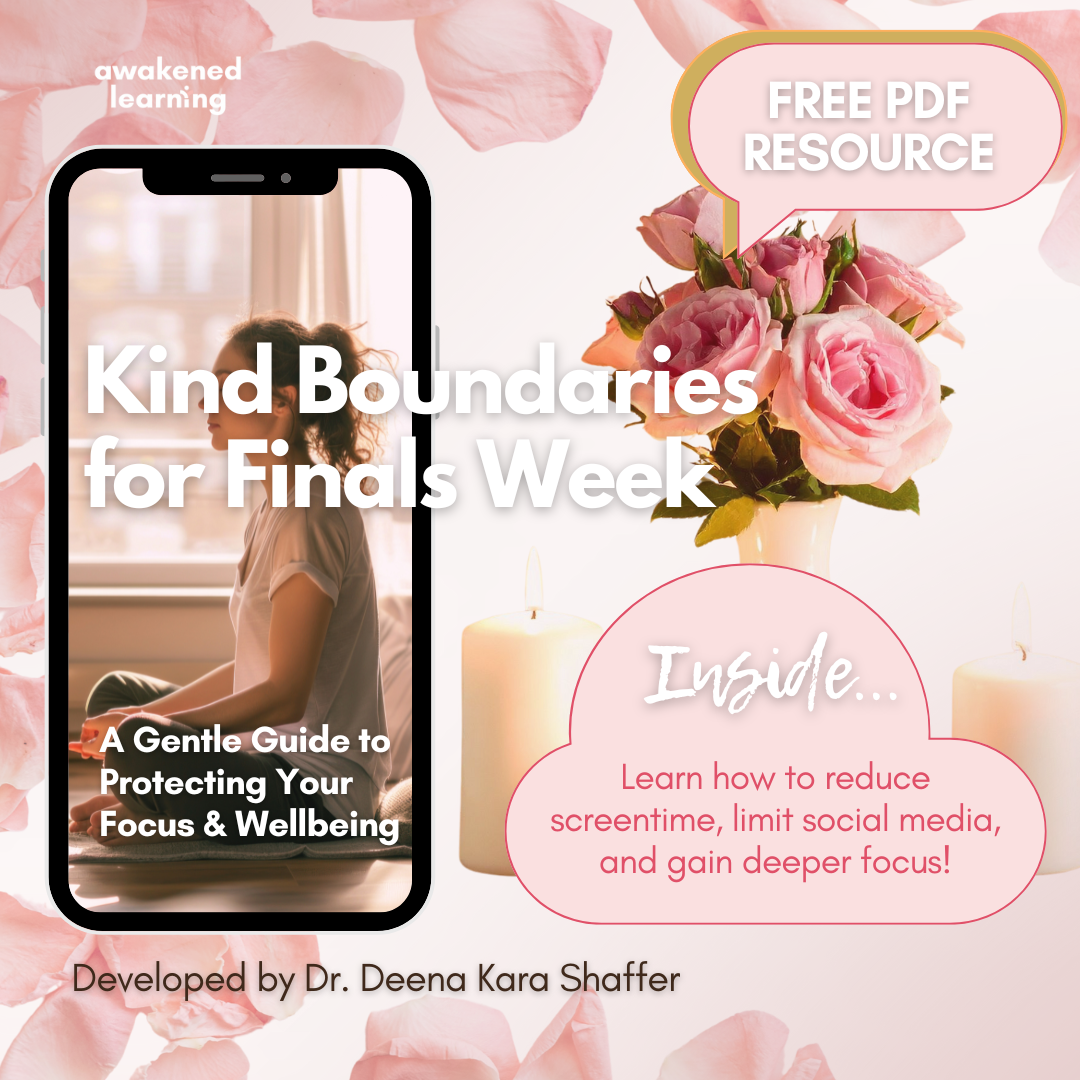
That’s why you need this free PDF guide packed with hints and strategies that can help you create healthy boundaries between you and your phone that create space for better learning.
Inside you’ll find…
Ways to limit screen time morning and night
How to stop yourself from scrolling
Tips for reducing phone usage during emotional states
Advice for setting up locations for success
Gentle reminders and mantras
This product will be sent you via a secure download link in your email.
Are you a fan of our PDF resources? Check out The Learning Strategy Studio for new PDF’s every month.
Something to try this finals season
For the next seven days, you might experiment with:
Small, Supportive Boundaries:
Morning: Try 10-30 minutes phone-free after waking
Evening: Phone in another room for one study session
Night: Phone charging outside your bedroom (and purchase an inexpensive non-phone alarm clock)
These aren't rules or requirements. They're gentle experiments. Try what feels possible.
Notice:
How your attention feels
How you sleep
What you accomplish
How you feel about yourself
If you’re supporting a student in your life
If you're someone who loves a student during finals, consider joining them in these experiments. Put your phone away during their study time. Create quiet, phone-free spaces together. Resist texting them while they're studying unless truly needed.
One parent shared with us: "We all put our phones in a basket from 7-10pm during my daughter's finals. She said it helped her feel less alone in making this change."
A compassionate perspective
Finals are challenging enough without competing with your phone for your own attention. Your work deserves your presence. Your learning wants your full engagement. Your wellbeing needs protection during this stressful time.
Creating space from your phone isn't about grinning, bearing, and gritting your way through. It's about being your absolute most kind and loving to yourself—giving yourself the conditions where you can do your best work and then rest properly.
Your phone will be fine without you for a few hours. Social media continues whether you're there or not. The content will wait.
But this moment—your finals, your learning, your chance to show what you know—this is happening now.