

Productivity Apps
The most powerful productivity tool is understanding how you learn, not which app is trending. Not which system worked for your roommate or your colleague or that person on social media who has somehow colour-coded their entire existence.

No One Talks About This
Reflection helps learners notice how they learn, what they understand, and where they're genuinely struggling. This is what learning scientists call metacognition, thinking about thinking.

Learning That Feels Like Vacation
Most of the learners I meet have been taught that the answer is, unequivocally, “no.” That if studying feels pleasant, they're probably not actually studying. That comfort and rigour are at odds, and that the more arduous the experience the more legitimate it must be.
I'd like to push back on that, gently, this season, because the longer I work in this field the less convinced I am that it's true.

The Case for Psychological Safety in Learning
This is capstone season, exam season, and the closing chapter of a school year. It’s also the time when academic stakes feel highest, and when the gap between "taking an intellectual risk" and "feeling personally at risk" can feel smallest.
When a learner doesn't feel psychologically safe, the end of a semester can feel existential. Every exam becomes not just a measure of what they know, but a verdict on what they're worth. Every wrong answer isn't an invitation to learn more, it's evidence of inadequacy.

Getting It Wrong
There is (yet another) a study that’s come out that I've been turning over in my head this week, on something researchers call pretesting. A team in Singapore had three hundred and forty-one adults learn Spanish vocabulary, and compared two ways of doing it. The first group studied the word-and-picture pairs in the way most of us were taught: by looking and rehearsing. The second group was asked to guess at the meanings before any teaching had happened, and was then shown the correct answer afterward. They had a three-in-four chance of being wrong. They did it anyway.

A Motivation Problem
What learning science consistently shows, and what I have watched play out with learner-client after learner-client over the years, is that motivation more reliably follows action than precedes it. You do not wait until you want to write the paper and then write it. You open the document. You write one imperfect sentence. And somewhere in that beginning, something shifts: not always dramatically, not always into enthusiasm, but enough. Enough to continue.

Ending on a Good Note
As a learning strategist, I work in the how of learning: the techniques, habits, and approaches that help people actually do the things they're trying to do. Right now, the how that matters most isn't really about studying techniques, it's about moving through a transition on purpose, and with care.

Capstones of Academic Health
SSH102 is a learning strategies course. That means we go underneath the courses students are taking, underneath the content, underneath the grades, and we tend to the how of learning. How to focus. How to study. How to manage time, not with willpower, but with actual tools. How to begin a task when everything in you is resisting. How to stay in the work instead of spinning out of it.
Student’s Guide to Note-Taking
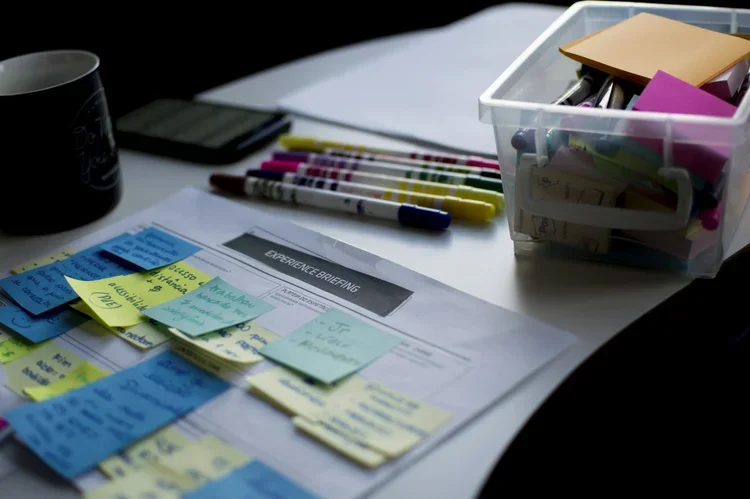
A lesson almost always begins with some form of review of the prior lecture and ends with a summary of that day’s lesson. Everything in between has identifiable signals that say, this is worth noting. When you know how to spot those signals, you stop trying to capture everything, and instead begin to capture what really matters..

9 Ways to Make School Work Easier
This isn't about laziness. This isn't about caring too little or trying too hard. A student might have the skills to write an essay, the time to write an essay, and the genuine desire to write an essay, but if the task as it currently exists doesn't match what their brain and being can handle right now, they're stuck. Not because something's wrong with them, but because the work hasn't been made doable yet.